
2025 Fantasy Football Tight End Tiers: A Top-Heavy Position with Promising Rookies
The tight end position in fantasy football remains as top-heavy as ever. While a handful of elite players offer a significant weekly advantage, the vast majority of the field consists of uninspiring options who are difficult to trust in your starting lineup. The 2025 NFL Draft saw an influx of exciting talent at the position, with two tight ends selected in the first round. However, history tells us that it often takes a year or two for rookie tight ends to acclimate to the NFL and become consistent fantasy contributors. This year, we’ll see a mix of established superstars, proven veterans, and a few rising stars who could break into the upper echelon. Here’s our breakdown of the tight end landscape for the 2025 season, ranked into tiers to help you navigate your fantasy draft.
Tier 1: The Game-Changers
These are the elite tight ends who provide a massive advantage over the competition. They are the cornerstones of their passing attacks and can be trusted to produce at a high level every single week. Drafting one of these players allows you to not think about the position for the rest of the season.
- Brock Bowers (LV): Brock Bowers is the consensus TE1 for the 2025 season, and for good reason. In a historically great rookie campaign, he wasn’t just good—he was elite. Bowers shattered records for a first-year tight end, pacing the position with 112 receptions, 1,194 receiving yards, and 153 targets. He finished as the overall TE2, and third in points per game, all while catching passes from a revolving door of quarterbacks, including Gardner Minshew, Aidan O’Connell, and Desmond Ridder. His usage was truly elite, as he was targeted on 25.9% of his routes, resulting in 2.02 yards per route run. Now, Bowers enters his second season with some significant changes. The most important is a massive upgrade at quarterback in Geno Smith. While the Raiders’ coaching staff is also undergoing an overhaul with the arrivals of Pete Carroll and Chip Kelly, who favour a more run-heavy scheme, the improved quarterback play should more than compensate for a potential dip in volume. Last season, the Raiders ranked fourth in the NFL in dropback rate (65.6%), but Carroll and Kelly’s past offences have typically hovered around a 58% dropback rate. This change could mean fewer overall pass routes for Bowers, but the quality of his targets should skyrocket. As a rookie, a league-high 8.2% of his short-area targets (under 10 yards) were inaccurate throws – a number that should drop significantly with Smith under centre, who has been one of the most accurate short-area passers in the league over the past two seasons (4.1% off-target rate). The other major area for improvement is touchdowns. Bowers was TE11 in expected points in the red zone but finished as TE21 in actual points scored there, with just one red-zone touchdown on 14 targets. As the team’s offence improves and gets to the red zone more often in 2025, his touchdown luck is due to normalize. Despite a potentially more balanced offence, Bowers remains the centrepiece of the passing attack, with little competition for targets. He is a generational talent insulated from a sophomore slump by his elite skill and a significant quarterback upgrade. He should be one of the first two tight ends off the board in fantasy drafts.
- Trey McBride (ARI): You can argue that McBride is the top candidate to finish as the TE1 for fantasy football in 2025. He followed up his 2023 breakout with an even more dominant 2024 season, racking up 111 catches and 1,146 yards, both of which were second at the position only to Brock Bowers. He also led all tight ends in target rate per route (27.5%) and expected fantasy points per game, commanding a staggering 31.7% of Arizona’s targets when on the field. The one thing missing from his otherwise elite profile is touchdown production. McBride scored just two receiving touchdowns last season, scoring 5.4 fewer touchdowns than his expected total—the worst difference among all tight ends and wide receivers. This isn’t a new issue, as he’s only logged six receiving touchdowns through his first three NFL seasons and never had more than four in a college season. Despite this, his usage in the red zone was elite, as he led all tight ends with a 32.8% red-zone target share. With the league’s base conversion rate for end-zone targets sitting at 44%, his anemic 20% rate over the past two seasons is screaming for positive regression. While the presence of Marvin Harrison Jr. will siphon off some targets, the Cardinals have done nothing else to shake up their pass-catching pecking order. McBride has been a TE1 scorer in 20 of his past 26 games since taking over the starting role, and if the touchdowns finally normalize in 2025, there is a very real chance he leads the position in fantasy points. This touchdown-or-bust element makes him an especially valuable pick in leagues that don’t fully reward catch points.
- George Kittle (SF): George Kittle continues to defy age and remains an elite fantasy option, boasting overall TE1 upside at a relative discount compared to his younger counterparts. The reigning TE1 in points per game, Kittle has an incredible streak of seven consecutive seasons finishing in the top six at his position. In 2024, he was as dominant as ever, catching 78 passes for 1,106 yards and 8 touchdowns in just 15 games. Kittle’s efficiency metrics tell the story of a player who is still at the top of his game. He led all tight ends in yards per route run (2.65) and boasts the highest career yards per route run (2.37) at the position. He remains a menace after the catch, averaging 6.7 yards after the reception, and led all tight ends with 21 receptions of 20+ yards last season. Kittle’s elite touchdown production (31 over the last four seasons) has also been a cornerstone of his value, as he led all tight ends with a staggering 30.3% share of the 49ers’ end-zone targets last year. Now, Kittle enters a new landscape in San Francisco following the trade of Deebo Samuel and with Brandon Aiyuk’s return from a knee injury uncertain. These moves, along with questions surrounding Jauan Jennings and Ricky Pearsall’s repeated hamstring injuries, leave Kittle as arguably the most reliable pass-catcher on the roster and could lead to a significant spike in his target share, a number that has hovered around 18% over the past four seasons. While his age (32) and durability are worth noting, his consistency and the team’s top-ranked passing schedule for 2025 make him an exceptional value. He may not have the same career arc as Bowers and McBride, but his proven production and elevated role give him a strong case to challenge for the top spot once again.
Tier 2: High Floor TE1s
These tight ends have the potential to challenge for the top spot, but have a bit more risk than the players in Tier 1. They are still strong starting options who should be drafted confidently.
- Sam LaPorta (DET): After an historic rookie season in 2023, Sam LaPorta’s sophomore campaign in 2024 took a slight step back, though his overall fantasy outlook remains incredibly bright. LaPorta opened the year dealing with nagging hamstring and ankle injuries, which led to a slow start and a dip in his counting stats. He finished with 60 receptions for 726 yards and 7 touchdowns, a drop-off from his rookie line of 86 catches, 889 yards, and 10 touchdowns. However, a deeper look reveals he actually improved his efficiency, averaging more yards per catch (12.1) and yards per target (8.7). Most importantly, LaPorta finished the season strong once he got healthy. From Week 8 onward, he was a mid-range TE1, averaging 4.8 catches for 53.3 yards per game and scoring five touchdowns in his final eight games. Over this span, his target share jumped to 20.4% (second only to Amon-Ra St. Brown) and he saw at least six targets in every game. This late-season surge returned him to the form fantasy managers saw during his rookie year and is a strong indicator of his potential moving forward. While LaPorta operates in a high-powered Lions offence, his ceiling can be capped by a crowded target tree that includes St. Brown, a potential breakout year from Jameson Williams, and a high-volume receiving back in Jahmyr Gibbs. The Lions’ offence may also be due for some scoring regression. However, LaPorta remains one of Jared Goff’s favorite red-zone targets, and his late-season usage shows he is still a cornerstone of the passing attack. With a mid-range TE1 floor and the upside to return to the top-three at the position, LaPorta is a rock-solid pick in fantasy drafts.
- Mark Andrews (BAL): Mark Andrews remains one of the most talented tight ends in the league, but his 2024 season was a mixed bag to say the least. After an injury-riddled start where fantasy managers were seriously considering dropping the veteran TE, Andrews was phenomenal from Week 5 on, finishing as the TE7 on the back of a career-high 11 touchdowns. He was a picture of efficiency, ranking third among tight ends with 2.21 yards per route run over that stretch. During that time there was a significant change in his usage, which makes him a riskier bet in 2025. Andrews’s route rate dropped to a career-low 65.8% (15th among tight ends), and his target share plummeted to 15%, a drastic decrease from the 22-28% range he maintained from 2019-2023. This reduced volume was masked by an unsustainable touchdown rate. A staggering 34.9% of his fantasy points came from touchdowns, and he converted an unbelievable 90% of his end-zone targets into scores – an historic outlier that is almost guaranteed to regress. The emergence of Isaiah Likely as a legitimate second tight end is the main driver behind this change in usage. Likely’s presence has reduced Andrews’s overall playing time, which is a major concern given his new-found touchdown dependency. Andrews will be 30 this September, and while he still possesses the talent to be a high-end TE1, his path to elite production is now tied to a high touchdown rate rather than consistent volume. He is a high-risk, high-reward pick at his current ADP, though a preseason foot injury to Likely that will keep him sidelined for 6-8 weeks does offer a potential short-term boost to his opportunity Andrews’ start the season.
- T.J. Hockenson (MIN): After an injury-shortened 2024 season, T.J. Hockenson enters 2025 with a healthy outlook but some significant questions about his fantasy ceiling. Returning in Week 9 from a torn ACL, he posted a respectable 18.2% target share (TE7) but saw a dip in his overall production, averaging 4.1 receptions and 45.5 yards per game with zero regular-season touchdowns. This was a far cry from his previous four seasons, which saw him consistently finish as a top-seven tight end. Hockenson’s outlook is complicated by Minnesota’s shift to a more run-centric offensive philosophy. The team has signaled a commitment to the run game with the extension of Aaron Jones, the addition of lineman talent, and the trade for Jordan Mason. This new approach is designed to protect rookie quarterback J.J. McCarthy, but it will inevitably lead to a reduction in the team’s overall pass volume, which was a key component of Hockenson’s success in previous years. Hockenson’s career profile is also a concern. He’s never been a high-touchdown scorer, failing to top six receiving touchdowns in any season. His yards after the catch have consistently been a weakness, with a career average that ranks outside the top 50 at the position. While he will be a reliable underneath target for McCarthy, his upside is definitely capped. A healthy Hockenson still provides a bankable floor as a weekly TE1, but his path to a top-three finish is more difficult than in years past. He can give you a safe floor each week, but I am passing on him for players with more upside at his current ADP.
- Evan Engram (DEN): Evan Engram’s move to Denver gives him a chance to be a focal point in a new offence, and his profile as a pass-catching specialist makes him an intriguing fantasy option. After a 2024 season plagued by injuries, Engram is looking for a fresh start with the Broncos and head coach Sean Payton, whose offences have historically been very tight end-friendly. Despite missing seven games last year, Engram was still heavily targeted, commanding a 25% target share that ranked third among all tight ends. Now with a clear path to being a top-two target earner in Denver alongside wide receiver Courtland Sutton, Engram is set up for a significant role. He’s an elite receiver from the position, as evidenced by his 26.6% target rate per route in 2024, also third-best among tight ends. However, for Engram to truly thrive in fantasy, he will need to overcome his historical lack of touchdown production. He hasn’t scored more than four touchdowns in a season since his rookie year in 2017. While his volume should be high, a few factors could cap his ceiling. The Broncos’ defence is one of the league’s best, and the team has made a concerted effort to improve its run game, which could lead to a lower overall passing volume. This is similar to the situation that Dalton Kincaid faced last year, where a high target rate was compromised by a limited number of passing plays. With Adam Trautman also on the roster as a blocking specialist, Engram’s route participation could be volatile. Engram is a high-floor, volume-based TE1 who will be most valuable in full-PPR and TE-premium leagues, but he will need to find the end zone more often to climb into the top tier of the position.
Tier 3: Solid Starters with Upside
This tier represents a mix of proven veterans and ascending players who are reliable every week, with the potential to break out and become a Tier 1 or 2 player.
- David Njoku (CLE): Even with inconsistent quarterback play, Njoku has established himself as a reliable fantasy asset. Despite battling injuries that cost him six games and a revolving door of quarterbacks, he finished as the TE5 and was a top-five scorer in seven of his 11 games. His elite volume was the key, as he ranked third among all tight ends in targets and catches per game and commanded 29% of the team’s targets when on the field. Looking ahead to 2025, Njoku is a heat-check tight end whose fantasy value is highly dependent on the quarterback situation in Cleveland. His ceiling was on full display in 2023 with Joe Flacco at the helm, where he produced a fantastic 2.41 yards per route run and a 27.8% target rate. While Flacco provides a bankable floor, the Browns are likely to turn to one of their rookie quarterbacks, Dillon Gabriel or Shedeur Sanders, at some point to assess their long-term potential. This quarterback uncertainty is the primary reason Njoku’s ranking remains this low. Njoku will need to overcome a history of injuries and a career-low 7.9 yards per catch last season. Historically, he hasn’t been a high-touchdown scorer, with his career high being just six, but he has been elite at earning end-zone targets. If a competent quarterback can be established in Cleveland, Njoku has a clear path to high-end TE1 production, making him a mid-range tight end with an immense weekly ceiling.
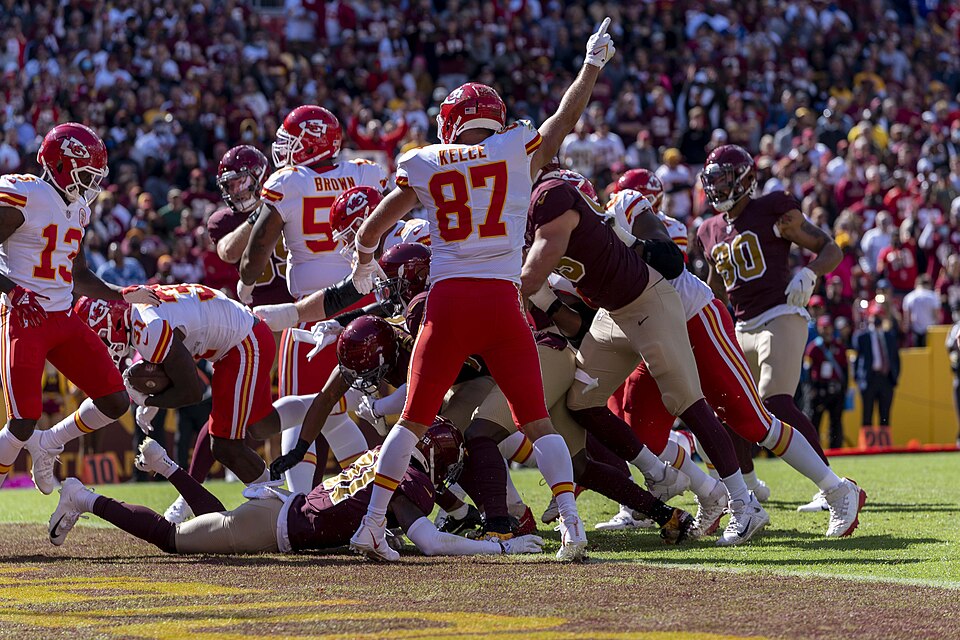
- Travis Kelce (KC): Kelce remains a high-floor tight end, but his days as a fantasy cheat code appear to be over. While his 2024 season was a statistical down year with career lows in yards (823), yards per catch (8.5), and touchdowns (three), he still commanded a high target volume and finished as the TE8 in points per game. At 36 years old this October, Kelce’s fantasy value is now tied to a savvy-veteran role rather than the all-out dominance performances of his prime. The Chiefs’ evolving wide receiver room is a key factor in this shift. Last season, Kelce’s target rate dropped significantly when Rashee Rice was on the field (16.2% of routes) compared to when he was off (24.4%). With Rice’s legal issues now resolved, he’s facing an expected multi-game suspension from the NFL which provides Kelce with an opportunity to be the undisputed alpha target for Patrick Mahomes at the start of the season, when he’s at his freshest. While a healthy receiver room with Rice, Marquise Brown, and Xavier Worthy could reduce his overall volume, it could also lead to a more efficient and less-strained Kelce. However, relying on a 36-year-old to spike in efficiency is a difficult bet. Kelce is no longer a player who can single-handedly win you a league, but his attachment to Patrick Mahomes and his clear-cut, albeit temporary, role as the team’s top option to start the season give him a bankable TE1 floor (and make him an extremely attractive trade chip). He’s a savvy veteran pick who can still provide big weeks, but fantasy managers should no longer expect top-three production on a season-long basis.
- Tucker Kraft (GB): Tucker Kraft is a high upside tight end who could win you some weeks. With Luke Musgrave missing time last season, Kraft seized the Packers’ starting tight end job and delivered a breakout season with 50 catches, 707 yards, and seven touchdowns. He proved to be an elite playmaker after the catch, averaging a league-high 9.1 yards after the catch per reception, a trait that draws easy comparisons to George Kittle. However, his fantasy ceiling is capped by the Packers’ offensive philosophy. Green Bay operates a low-volume passing attack, and its receiving corps is one of the most crowded in the league. With Jayden Reed and Romeo Doubs competing for targets with first round pick Matthew Golden, and a healthy Luke Musgrave expected to dilute the tight end snap share, Kraft will likely be a part of a committee. His volume was consistently low in 2024, with six or fewer targets in 15 games. Ultimately, Kraft’s value is dependent on his hyper-efficiency, a risky proposition for weekly consistency. He’s a talented, ascending player who can turn out to be a fantastic pick when you are boxed out of the early tight end options. While his lack of consistent volume makes him a high-end TE1, his explosiveness and connection with Jordan Love give him the upside to deliver high end TE1 performances.
- Dalton Kincaid (BUF): It’s time to reset expectations for Dalton Kincaid. After a promising rookie season, his 2024 campaign was a major disappointment, plagued by a PCL injury and other ailments that contributed to a noticeable drop in production. While he led the Bills with an elite 27.2% target rate per route, his low route participation (62.9%) and the Bills’ low-volume passing attack (28th in dropbacks per game) capped his overall opportunities. Kincaid finished the season with a career-low 3.4 receptions and 34.5 yards per game, and he failed to clear 53 receiving yards in a single game. Kincaid’s biggest issue has been his lack of a defined role near the end zone. Despite his high-end target rate on the field, he has only seen seven end-zone targets through two seasons. The Bills’ offence, which relied on a high rate of rushing touchdowns last year, needs its passing volume to rise and for Kincaid to finally see a consistent red-zone role. With a limited wide receiver room on paper, there’s still hope for a third-year breakout. However, Kincaid’s low route participation, lack of scoring, and history of injuries make him a risky prospect. He’s a fringe TE1 with a first-round pedigree and a great quarterback, but he needs a significant role change to truly be a difference-maker in fantasy.
Tier 4: The Wild Cards
This tier is full of players who offer high risk and high reward. Their fantasy value is dependent on a variety of factors, from quarterback play to injury situations. They’re worth a look as a late-round tight end, but their floor is also lower than the players above them.
- Colston Loveland (CHI): Colston Loveland arrives in Chicago as an exciting prospect with a clear path to fantasy relevance. The narrative is powerful: he was the first draft pick of the new Ben Johnson era, the same offensive coordinator who helped turn Sam LaPorta into a rookie fantasy sensation. Loveland’s college profile supports this upside, as he led his class with a 37.6% target rate per route and a 2.67 yards per route run in a low-volume Michigan passing attack. His positional versatility and youth (21) make him a fascinating fit in Johnson’s multi-tight end scheme, which often features two tight ends on the field. However, Loveland’s path to a rookie breakout is not as clear-cut as LaPorta’s was. He faces a much more crowded and talented receiver room in Chicago, with established pass-catchers D.J. Moore and Cole Kmet, along with fellow first-round pick Rome Odunze and second-round pick Luther Burden III. While Johnson’s offence can support multiple receiving options, Loveland will need to be hyper-efficient to earn a significant target share. There’s a steep learning curve for rookie tight ends, and the Bears are also still breaking in a new franchise quarterback in sophomore Caleb Williams. Both of these factors introduce volatility into Loveland’s outlook. While he has the talent and the coaching connection to be a valuable asset, his dynasty value is higher than his redraft appeal. He’s a high-upside late-round tight end to target, but fantasy managers should temper expectations for an immediate, season-long TE1 performance.
- Jake Ferguson (DAL): Jake Ferguson’s 2024 season was a tale of two halves, but his 2025 outlook is a complex mix of good news and bad. After a breakout 2023 season, he regressed significantly in 2024, managing just 494 yards and zero touchdowns. A multi-game absence and the season-ending injury to quarterback Dak Prescott were the primary culprits. With Prescott, Ferguson was a reliable TE1, averaging 10.2 fantasy points per game. Without him, his production plummeted to a career-low 5.2 points per game. The good news is that Prescott is returning, which should provide a much-needed boost to Ferguson’s fantasy value. However, the bad news is the arrival of wide receiver George Pickens, who will immediately compete with Ferguson for targets behind the undisputed alpha, CeeDee Lamb. In 2023, Ferguson’s appeal was his clear path to being the Cowboys’ second target, but Pickens’ presence pushes him further down the pecking order. Compounding this issue is Ferguson’s lack of explosive talent. With a career average of just 9.6 yards per catch and 4.5 air yards per target, he’s a player who relies heavily on high-volume opportunities to be fantasy-relevant. While Prescott’s return should help him get back on track and potentially reverse his touchdown regression (he had 10 end-zone targets in 2023 but only two in 2024), the competition from Pickens caps his ceiling. Ferguson is a solid TE2 with a bankable floor, but his path to becoming a top-tier tight end is now much more difficult.
- Kyle Pitts (ATL): Kyle Pitts is one of the most frustrating players in fantasy football, and for good reason. After an elite rookie season in which he became the first tight end in 50 years to surpass 1,000 yards, his production has declined every year since. In 2024, Pitts posted a career-low 1.34 yards per route run, and over the final nine games of the season, he managed only 183 receiving yards with a high mark of just 55. The struggles can be attributed to more than just poor quarterback play. Pitts was a poor fit in the previous offensive scheme, where he was forced into an inline blocking role on a career-high 51.3% of his snaps. This did not suit his strengths, as he was a negative in the running game and struggled to get open on shorter routes. This ultimately led to him being out-snapped by blocking tight end Charlie Woerner at the end of the season. The good news is that Pitts, who is still just 24 years old, has a potential fresh start. He’s playing this season on his fifth-year option with a new quarterback in Michael Penix Jr. While the change could be the catalyst Pitts needs, fantasy managers should be cautious. After four years of unfulfilled potential, he’s nothing more than a bench lottery ticket. He has the elite pedigree and the potential to be a fantasy difference-maker, but his recent production and poor scheme fit make him a high-risk gamble.
- Tyler Warren (IND): Tyler Warren is a fascinating tight end prospect, and his selection by the Colts with the 14th overall pick in the 2025 NFL Draft puts him in a prime position for long-term success. Coming off a season at Penn State where he won the Mackey Award, Warren demonstrated elite pass-catching ability, logging an absurd 104 receptions for 1,233 yards and eight touchdowns. A true Swiss Army Knife, he was used all over the field, from the slot to the backfield, and his elite efficiency metrics—including a 30.5% target rate on his routes and a class-high 19 red-zone targets—highlight his potential to be a featured weapon from day one. The short-term fantasy outlook, however, is clouded by significant questions in Indianapolis. The Colts’ offence, under Shane Steichen, struggled mightily with a low-volume passing attack in 2024, and the quarterback situation remains a major roadblock. Both Anthony Richardson and Daniel Jones were among the least efficient quarterbacks in the league last season, and they are currently locked in a battle for the starting job. With a talented group of wide receivers that includes Michael Pittman Jr., Josh Downs, and Adonai Mitchell, Warren will also be competing for a limited number of quality targets. While his talent and versatile skill set make him a terrific dynasty hold, his rookie season could be volatile. He’s a high-upside late-round lottery ticket in 2025 drafts, where you’re betting on his talent to overcome the team’s quarterback uncertainty. With the potential for red-zone looks and even designed touches, he could be a fringe TE1, but fantasy managers must be patient for a true breakout.
- Dallas Goedert (PHI): Dallas Goedert enters his eighth NFL season as a highly efficient but frustratingly inconsistent fantasy option. Despite missing seven games in 2024 with hamstring and knee injuries, he was remarkably productive on a per-route basis, finishing second among all tight ends with 2.20 yards per route run. He was particularly dominant against man coverage, leading the position with a robust 3.48 yards per route. However, Goedert’s fantasy value is consistently capped by the Eagles’ offensive philosophy. As one of the most run-centric teams in the league, Philadelphia’s low passing volume means fewer targets to go around. Goedert is also well-established as the third option in the passing attack, behind A.J. Brown and DeVonta Smith, and his red-zone opportunities are further limited by the presence of Jalen Hurts and now Saquon Barkley. This has been a long-standing issue, as Goedert has not scored more than four touchdowns in a single season since 2019. While his per-game production provides a safe floor—he has finished as a top-12 fantasy scorer on a per-game basis in six straight seasons—his durability has been a concern, missing 22 games during that span. He is a high-end TE2 who offers significant contingent value; his target share spiked dramatically in games that Brown or Smith missed. Goedert is a reliable floor play, but the combination of the Eagles’ run-heavy approach and the crowded receiver room makes it difficult to project him as a top-tier tight end.
- Isaiah Likely (BAL): Likely is a talented tight end with high upside, but his fantasy value remains capped as long as Mark Andrews is on the field. Likely’s 2024 season was a head-scratcher that started with a bang, as he exploded for 111 yards and a touchdown in Week 1. However, he failed to come close to those numbers for the rest of the season. He did set early-career highs with 42 receptions, 477 yards, and six touchdowns, but his fantasy viability was inconsistent. The primary hurdle for Likely’s fantasy value this season is an early training camp injury. He suffered a foot fracture that required surgery, and while the team hopes for an early-season return, a Week 1 comeback isn’t a sure thing. This will cause him to miss the entirety of training camp and likely get off to a slower start to the season. As long as Andrews is on the roster, Likely’s role is limited, which was evident in 2024 when he was a TE1 scorer in only four of the 14 games after his Week 1 explosion. Likely’s value is directly tied to the availability of Mark Andrews. In the nine games Andrews has missed, Likely has been a reliable TE1, averaging 50 yards per game. He’s a great bench stash who would immediately become a top-tier fantasy tight end if Andrews were to miss any time, but his injury setback means he should not be drafted as a weekly starter.
- Brenton Strange (JAX): Brenton Strange enters his third season with a golden opportunity to become the Jacksonville Jaguars’ starting tight end after Evan Engram’s departure to Denver in free agency. With Engram’s 207 targets over the past two seasons now up for grabs, Strange is in line for a significant role. When Engram was sidelined for nine games last season, Strange gave us a glimpse of his potential, catching 40 of 53 targets for 411 yards and two touchdowns. During that stretch, he handled a solid 14.6% target share and averaged 6.9 fantasy points per game, though his production was inconsistent, highlighted by one big game and seven others under 12.4 points. The Jaguars’ front office, a different regime from the one that drafted Strange in the second round in 2023, didn’t add a new pass-catching tight end to challenge him for the starting job. Instead, they brought in veteran blockers Johnny Mundt and Hunter Long, who have a combined 31 career receptions. This indicates that Strange is viewed as the team’s primary receiving option at the position. However, Strange will have to compete for targets with a talented group of pass-catchers, including the featured wide receivers Brian Thomas Jr., Travis Hunter, and Dyami Brown. Furthermore, while the new additions signal a clear path to receiving volume, Strange’s own run-blocking skills are a potential liability. He ranked 44th in run-blocking grade last season, far behind new teammate Hunter Long (fifth). This could lead to a situation where Strange’s route participation is limited on run-heavy downs, capping his overall ceiling. Given the competition and a potentially volatile role, Strange is a low-ceiling TE2 who will be tough to trust on a weekly basis, but he has the opportunity to outplay his draft position if he can secure a larger share of the target volume.
Tier 5: Deep Leagues and Potential Breakout Options
These are players who are likely available in the later rounds of your draft and are best suited for deep leagues, as a second tight end on your bench. I also want to highlight some younger players here who are worth taking a flier on and hoping that things break right for them in their young careers.
- Jonnu Smith (PIT): Jonnu Smith is coming off a career-best season in Miami, finishing as a top-five fantasy tight end in 2024. He now reunites with offensive coordinator Arthur Smith in Pittsburgh, which is a mixed bag for his fantasy value. While his familiarity with the scheme is a positive, Arthur Smith’s run-heavy philosophy and history of using multiple tight ends will likely lead to fewer pass attempts and a smaller target share compared to his time in Miami. Competing with Pat Freiermuth and other pass-catchers like DK Metcalf for targets, Smith projects as a mid-to-back-end TE2 with a much lower ceiling, making him a risky pick for fantasy managers expecting a repeat of his 2024 breakout.
- Mike Gesicki (CIN): Mike Gesicki re-signed with the Bengals on a three-year contract after a productive 2024 season where he finished third on the team in targets, receptions, and yards. Gesicki’s fantasy value is directly tied to the availability of Tee Higgins, as his target share and yards-per-route-run were significantly higher in games Higgins missed. While he benefits from playing in a pass-heavy offence with Joe Burrow, his boom/bust nature and low touchdown production make him a fine TE2 target who is a better option as insurance for Tee Higgins.
- Elijah Arroyo (SEA): Elijah Arroyo, a second-round pick by the Seahawks, is an explosive downfield playmaker who led his draft class in efficiency metrics like yards per reception and first-down rate. Despite his talent, his fantasy value for 2025 is a long shot due to a history of knee injuries, a need to improve as a blocker, and stiff competition from a superior run-blocker in A.J. Barner. He will likely be used as a splash-play option in Klint Kubiak’s offence rather than a full-time starter early in his career. Arroyo is a compelling long-term dynasty hold but is best viewed as a late-round sleeper in deep redraft leagues or a week winner in best ball leagues as he will have the odd game where he busts out this season.
- Mason Taylor (NYJ): Mason Taylor was a second-round pick by the Jets, making him one of the most intriguing rookie tight ends in the class with a clear path to a starting role. He’s coming off career-bests with 55 receptions for 546 yards at LSU, demonstrating reliable hands with only one drop on 79 targets. While he will be attached to a run-first quarterback in Justin Fields, who could limit the overall passing volume, Taylor has a chance to be the second-most targeted player on the team behind Garrett Wilson. He presents as a fine late-round dart throw in deep leagues, with a decent floor for a rookie due to the team’s shallow receiving depth.
- Ja’Tavion Sanders (CAR): Ja’Tavion Sanders enters his second season as a young, promising tight end with a clear path to a larger role in the Panthers’ offence. Sanders flashed potential as a rookie, but his production was inconsistent and tied to Tommy Tremble’s availability. With Tremble recovering from back surgery and on the PUP list at the start of training camp, Sanders has an opportunity to solidify his position as a featured pass-catcher for Bryce Young. While his upside may be capped by the early-round selection of Tetairoa McMillan, Sanders’ youth and favorable circumstances make him a worthwhile late-round flier in deeper leagues.
- Theo Johnson (NYG): Theo Johnson enters his second season with the Giants after a rookie year that saw him flash potential before a season-ending foot injury. After a slow start, the fourth-round pick’s role expanded significantly, culminating in five or more targets across his final four games. Now fully healthy and working with new quarterback Russell Wilson, Johnson has a chance to build on his late-season momentum. The Giants’ passing game is expected to be more effective with Wilson, making Johnson a fine late-round sleeper with breakout potential if he can continue his upward trend.
- Ben Sinnott (WAS): Sinnott was a second-round pick who joined a new-look Commanders offence played a minimal role, collecting just five targets across 17 games. His path to fantasy relevance is currently blocked by Zach Ertz, but I am betting on Ertz continuing to slow down and Sinnott taking control of more of the snaps by the latter half of the season. However if the Commanders are in the hunt for the playoffs they might stick to their reliable veteran and the Sinnott breakout could still be a year away.
Tier 6: How Are They On Your Roster
This tier is reserved for veterans who will still be on the field, and might even surprise with the odd touchdown, but will only be rostered in the deepest of formats.
- Hunter Henry (NE): Hunter Henry is coming off a career-best year in 2024, leading the Patriots in targets, catches, and receiving yards. However, his fantasy value was suppressed by an unsustainable low of just two touchdowns. While Henry could benefit from a potential Year 2 leap from quarterback Drake Maye, his fantasy outlook is clouded by new target competition from Stefon Diggs and rookie Kyle Williams. Henry projects as a midrange TE2, with his value largely tied to positive regression in the touchdown department.
- Pat Freiermuth (PIT): Pat Freiermuth’s 2024 season saw a career-high 65 catches and seven touchdowns, yet he failed to emerge as a consistent fantasy starter, finishing 14th in fantasy points per game. His 2025 fantasy outlook is a mix of good and bad news. The arrival of new quarterback Aaron Rodgers is a clear positive, as Rodgers has historically favoured tight ends. However, the Steelers also acquired Jonnu Smith, a tight end with a history of coexisting with Arthur Smith in a two-tight-end system, which will likely cap Freiermuth’s target share and make him more touchdown-dependent. Freiermuth is a solid mid-to-back-end TE2 with a low ceiling, making him a touchdown-dependent player in a new-look Steelers offence.
- Chigoziem Okonkwo (TEN): Chigoziem Okonkwo enters 2025 as the top tight end for the Titans, with a clear path to being a priority target. While his production has been marginal over the past two seasons, his efficiency and yards per catch have regressed since his rookie year. He did show a late-season surge in targets in 2024, and with new quarterback Cam Ward under centre, there’s a chance he could carry that momentum into the new season. Ultimately, Okonkwo is a back-end TE2 whose fantasy value hinges on better quarterback play and a return to his rookie-year efficiency.
- Dalton Schultz (HOU): Dalton Schultz is coming off a disappointing 2024 season, posting his lowest reception and yardage totals since 2019, despite ranking fifth among tight ends in snap share. His fantasy output was severely limited by a lack of touchdowns and red-zone usage, a stark contrast to his previous seasons. While the departures of Stefon Diggs and Tank Dell could theoretically open up targets, the Texans have added new pass-catchers, and Schultz also faces potential competition from second-year tight end Cade Stover. With his upside capped by a crowded receiving group, Schultz is a low-end TE2 without much late-round appeal.
- Zach Ertz (WAS): Zach Ertz enters his 13th NFL season with the Washington Commanders after a successful 2024 campaign in which he finished as a TE1. He was a reliable safety blanket for quarterback Jayden Daniels, especially in the red zone where he tied for the team lead in targets and touchdowns over the final seven games. However, Ertz’s 2025 fantasy outlook is dampened by significant target competition from the newly acquired Deebo Samuel and second-year tight end Ben Sinnott. At 34 years old, Ertz is best viewed as a low-ceiling TE2, with his value tied to his red-zone usage in an offence that may have more weapons but also more competition for his preferred short-area targets.
- Cade Otton (TB): Cade Otton enters 2025 as the starting tight end for a high-powered Buccaneers offence, but his fantasy value is a low-ceiling bet. While he set career-highs in targets, receptions, and yards last season, much of that production came during a stretch when Mike Evans and Chris Godwin were injured. With both star receivers healthy and the addition of rookie Emeka Egbuka, Otton’s target share is expected to decline. He projects as a touchdown-dependent, low-end TE2, making him a risky fantasy option unless multiple dominoes fall in his favor.
- Cole Kmet (CHI): Cole Kmet’s fantasy stock took a significant hit with the Bears’ first-round selection of tight end Colston Loveland. Despite leading all tight ends in snaps and routes run in 2024, Kmet saw his production plummet to career lows in catches and yards per game, and he finished outside the top-20 fantasy tight ends. While new offensive coordinator Ben Johnson may increase the use of two-tight end sets, Loveland is expected to take on the primary pass-catching role, leaving Kmet as a touchdown-dependent player with a severely capped ceiling. He is well off the fantasy radar and can be left undrafted in most leagues.
-Devon Gallant
Twitter: @DevGallant
Photo: All-Pro Reels. This file is licensed under the Creative Commons Attribution-Share Alike 2.0 Generic license.