
On Monday the Canadian Football League announced a series of new rules which will be phased in over the next two seasons aimed at improving the on field product and viewing experience.
While the CFL purist will scoff at any changes the league would have tabled, reaction from around the league regarding the changes has been mixed. Some find the changes overdue, and are curious to see how the modifications will impact scoring, while others believe it “Americanizes” the game, and gets away from some of the quirks that make Canadian football special.
For those who may have missed it, the league will implement the following changes over the next two seasons:
2026 Changes
-In 2026, teams will now be required to have their benches on opposite sides of the field, allowing for quicker substitutions, and removing opportunities for sideline spats.
-The league will also implement 35 second play clocks which will automatically begin as soon as the previous play is whistled dead next season. Currently, the 20 second play clock does not begin until it is signalled to start by an official.
-And finally, the “loser point” will be removed from the game. A single point will no longer be awarded for a missed field goal attempt, or punt/kickoff which rolls through the end zone without being touched by a returner. Instead, if a punt/kick settles in the end zone, and the returner fails to run it out, or takes a knee, that will now be the only instance in which a rouge is awarded.
2027 Changes
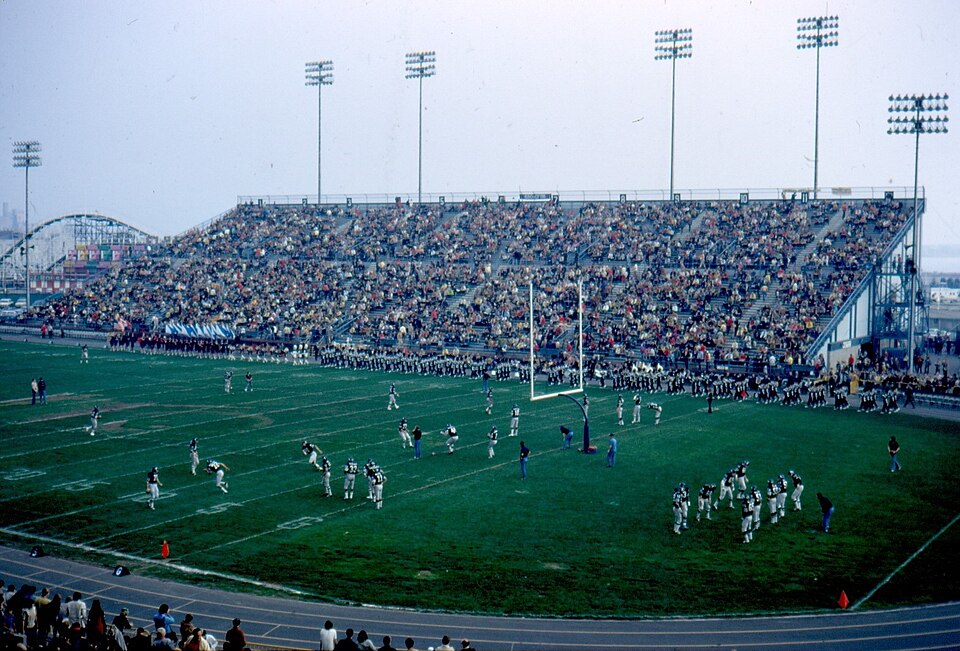
-Field dimensions. The league will be moving to 100 yard field lengths, and 15 yard end zones. Currently CFL fields are 110 yards long with a 20 yard end zone. The width of the field will remain 65 yards wide.
-The goal posts will be moved to the back of the end zones, removing the obstruction which sits in the middle of the field.
“This is all about making our great game even more entertaining,” said CFL Commissioner Stewart Johnston. “We are trading field goals for touchdowns, while improving fan experience in stadiums and at home.”
“These changes are the most significant in decades. We are retaining the unique elements upon which our traditions stand, but innovating where change is needed to evolve our world-class game.”
“Our governors do not take change lightly because they know how much the CFL, and the Canadian icon that is the Grey Cup, mean to generations of Canadians. These changes are about improving something that is already great. They are rooted in data and analytics; they have been thoughtfully and carefully considered. But they are big and bold because that’s what’s necessary to make our fantastic game even more entertaining, and to win in the attention economy.”
While the package of changes was approved unanimously by the CFL’s lead governors, it appears as though the players themselves weren’t consulted about the impending changes to the game. A fact which irked BC Lions QB Nathan Rourke who didn’t hold back his thoughts when speaking to members of the press.
“New rule changes are garbage. It’s garbage. I, as many people did — who are fans and people who play in this league — grew up watching the CFL and loving the game. I grew up in Ontario, played Canadian football rules all my life. I went down to the States proud of the game, being able to explain the differences — the waggle, the yard, the extra person. These are the things that are unique about the game that make it different. I was aware and was a fan of the league down there, but was a fan of the CFL because of its differences,” Rourke said.
“The rule changes to me make it sound like we want to be that league down south, we want to be that league. From recent history and years past, leagues that have tried to emerge to try to be like the NFL haven’t existed for very long. The CFL game has existed for longer than the NFL and there’s a reason for that. It’s unique, the fans love it, I grew up loving this game and they’re changing that — they’re getting rid of a lot of things.”
“The worst part, I think, about it, honestly, is the fact that the people who play football, who have the football knowledge, were not consulted about this. The players weren’t consulted, the coaches, management, nobody was consulted. This was done on their own accord, this was done independent of asking anyone who actually knows football what they want to do, what they think would be better,” Rourke said.
“We have a commissioner who hasn’t been here for a year who’s already trying to change the game. I don’t believe he loves football as much as I do, as much as many fans do, as much as people who grew up loving this game. You cannot make adjustments like this and tell me that you like football or you love the Canadian football game because you’re changing it.”
“What we’re moving towards is not the Canadian football game that I grew up loving, that I’m passionate about, that I came back and played. I went down and played in the NFL in that league and I came back knowing that this is a game for me because of the uniqueness of it, what’s special about it and we’re getting away from that. Frankly, makes me pretty pissed off.”
Indeed there doesn’t appear to be a large contingent of fans, former players, coaches, or members of the media who take umbrage with anything proposed for the 2026 season. Moving benches, and changing the play clock rules appear, for the most part, to be generally accepted as positive steps forward.
Even the changes to the rouge, an integral part of the CFL’s history, seem to have been met with approval from the broader community as the rare instances where a team has won a game off a missed field goal have never sat well with anyone but the most stubborn gatekeepers of the Canadian game. Not allowing outcomes to be determined by failures to score a field goal or a touchdown, while also keeping the single-point in the game as something special teams players need to be conscious of is a good compromise to appease both sides of the argument.
Where most of the derision comes from stems from the changes which will come into play in 2027. Those in favour of change point towards development pipelines for Canadian athletes being able to be recruited and play south of the border as a result of having a game that more closely resembles the NFL product.
They’ll also bring up data points like the league’s projected “10 percent more end zone completions and 60 more touchdowns per season”, though where these forecasts are coming from remains a bit of a mystery in and of itself as well.
Undoubtedly, moving closer to an American version of play is also being done with an eye towards future expansion, and finally securing that elusive 10th franchise. Whether that materializes on the east coast, or down south remains to be seen, however it makes the product of football itself more consistent in its play across North America.
The other side of the coin largely echo the points Rourke brought up in his tirade on Monday: legacy, tradition, and a “if it ain’t broke, don’t fix it” mentality with regards to a league that’s been around longer than its American counterpart.
Lost in this, but is nevertheless important, is the question as to whether the rules themselves will make the game more appealing to the casual observer, or whether the league’s troubles all come back to the CFL’s seeming inability to properly market itself. Will changing the dimensions of the field or the goalpost locations actually bring in more viewers, season ticket holders, or drive merchandise sales? Or is this the equivalent of slapping a new coat of paint onto a dilapidated house? It might add curb appeal, but does little to change the fact that there are larger internal issues.
It’s hard to say at this point what, if any, effect “changing the canvas” (a term commissioner Johnston referenced multiple times in his sit down interview with Dave Naylor), will have on the Canadian game. But one thing is for certain, change was indeed needed for the league if it ever wants to grow the game, and become a major player on the international sports scene.
This was a big swing for league’s head office, and one they made knowing full well that it would go over like a lead balloon amongst the purist crowd. However it’s evident that they feel as though the number of potential new fans that will come in as a result of these changes outweighs the number of die-hards who will stop watching the sport altogether because of them.
And for better or worse, that’s going to be a decision which will largely define Johnston’s time as CFL commissioner.
-Kyle Skinner
Twitter: @JKyleSkinner
Photo: TorontoGuy79. This file is licensed under the Creative Commons Attribution-Share Alike 4.0 International license.